
In the financial statements, this type of spoof leverage is represented under the list of liabilities. Financial leverage helps you to continue with your investments even if the business does not have enough cash. Equity financing is the most preferred option in this case, as it allows you to raise money without liquidating your ownership.

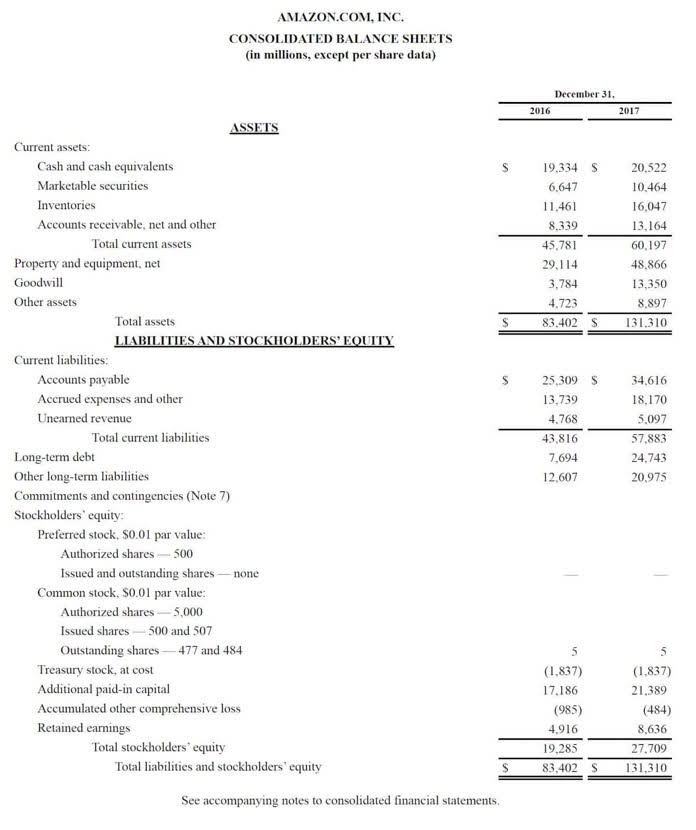
Total Debt to Total Asset Ratio
The unusually large swings in profits caused by a large amount of leverage increase the volatility of a company’s stock price. Using the above information, let us calculate the financial leverage for all the years. The return on equity (ROE) is therefore greater, since the borrowed funds are not included in its calculation. In the “Upside” case, the company is generating more revenue at higher margins, which results in greater cash retention on the balance sheet. Sometimes the best course of action could be to potentially hire a restructuring advisory firm in anticipation of a missed interest payment (i.e. default on debt) or breached loan covenant.
- For the all-equity firm, the pre-tax income is equal to EBIT because there is no debt in the company’s capital structure.
- If you’re in the thick of that process, you need to have a grasp on some key metrics and sticking points — one of them being something known as your leverage ratio.
- Each formula returns the exact year-end figure reported by the company.
- Leverage Ratio measures a company’s inherent financial risk by quantifying the reliance on debt to fund operations and asset purchases, whether it be via debt or equity capital.
- That said, a debt ratio of 33% shows the majority of Apple’s assets are still financed by equity, which softens the risk profile a bit.
- Then decide whether Company C should (1) take on more debt, (2) refinance/extend maturities, or (3) reduce leverage before expanding.
Investment Plans
- Financial ratio analysis is used by a company’s external and internal stakeholders to assess financial health.
- Connect with Fincart for personalized financial advisory services and achieve your financial goals with confidence.
- When a firm with high operational leverage experiences an increase in sales, most of the extra revenue flows into profit after covering fixed costs.
- There are three proportions of leverage that are financial leverage, operating leverage, and combined leverage.
- For instance, if the debt-to-asset ratio is 0.7, it means the company uses debt to finance 70% of its asset purchases.
This type of leverage combines what are retained earnings both operating and financial leverage, and represents the overall risk exposure of a company. It shows how fixed costs as well as debt impact a company’s profitability and risk. When individuals and companies use debt to finance investments, they are said to be employing financial leverage. They borrow funds to buy assets with the expectation that the income or profit from the investment will be more than the cost of interest and principal repayments.
What is tier 1 capital for banks?

It is true that the capital structure cannot affect the total earnings of a firm but it can affect the share of earnings for equity shareholders. Negative financial leverage occurs when the cost of debt what is financial leverage exceeds the return generated from borrowed funds. This destroys shareholder value as the company pays more in interest than it earns from investments. High financial leverage can be good when a company has stable cash flows and earns returns above its borrowing cost. It becomes bad when cash flows are unpredictable or during economic downturns, as fixed interest payments magnify losses and increase bankruptcy risk.
Investment Decisions
Analysts typically evaluate a set of ratios across liquidity, profitability, leverage, and efficiency before drawing conclusions. Efficiency ratios measure how effectively a business uses its assets and manages its operations to generate sales. Efficiency ratios focus on a company’s ability to quickly convert resources like inventory, receivables, and assets into sales or cash. The leverage ratio—or debt-to-EBITDA ratio—is calculated by dividing the total http://wp001.dolphingoo.com/2024/09/20/columbus-bookkeeping-and-business-services-llc-bbb-2/ debt balance by EBITDA in the coinciding period.
Committed to Creating A Balance

In this case, Rahul is using financial leverage by borrowing money (in the form of a home loan) to purchase an asset (the second house). The rental income generated from the house is expected to exceed the cost of borrowing (including interest), which increases Rahul’s overall return on investment. After he pays off the mortgage, Rahul will fully own the second house and continue to receive rental income, which will now contribute totally to his profit. Should the borrower be unable to pay the interest or the loan amount, it can lead to financial strain, reputational damage, loss of assets, and even bankruptcy.